
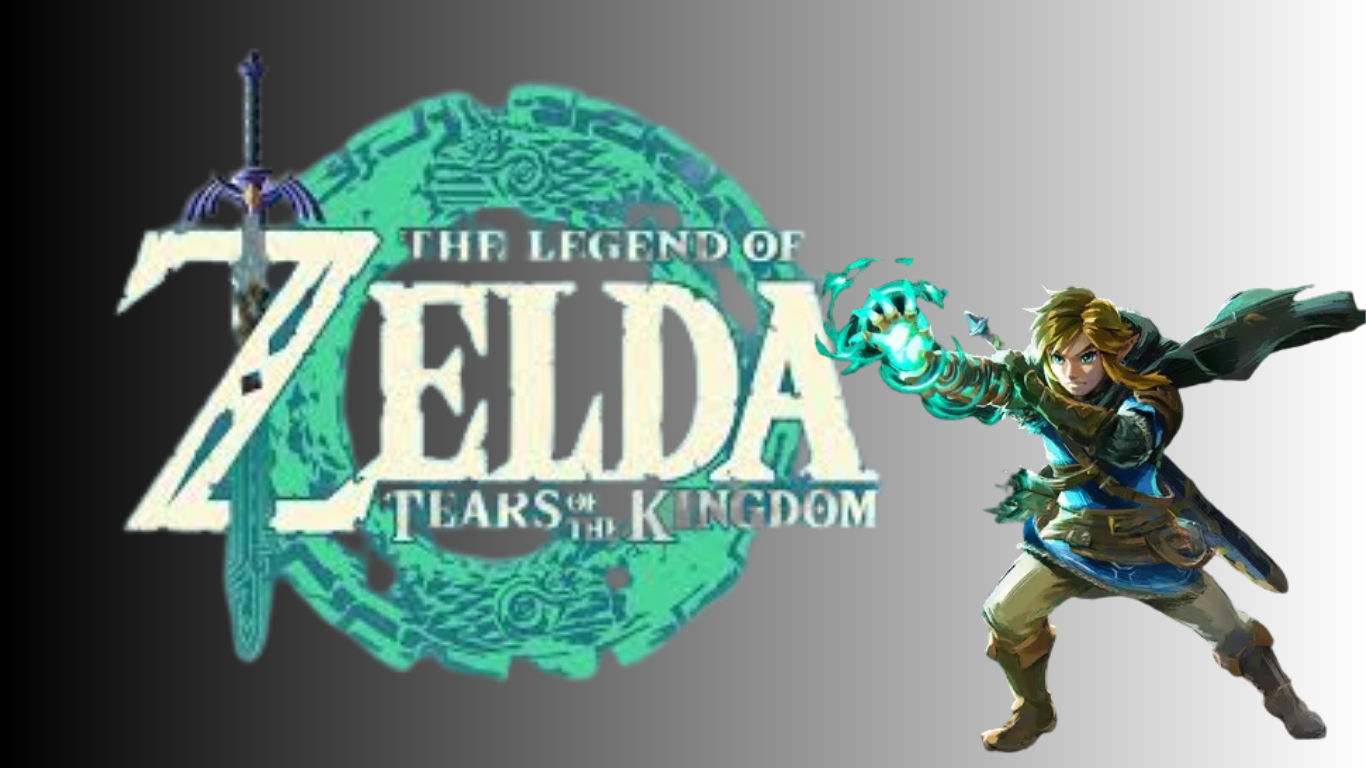
The Legend of Zelda: Tears of the Kingdom doesn’t just follow up on greatness—it expands it in every direction. Developed and published by Nintendo, this sequel to Breath of the Wild transforms Hyrule into a playground of creativity, experimentation, and discovery.
Rather than reinventing the formula, Tears of the Kingdom builds on it—adding deeper systems, new layers to explore, and unprecedented player freedom.
The result is one of the most ambitious and rewarding games ever made.

A World Expanded in Every Direction
Hyrule returns—but it’s far from the same world.
In addition to the familiar overworld, Tears of the Kingdom introduces:
- Floating sky islands
- A vast underground known as the Depths
These new layers dramatically expand exploration. Every region feels fresh, even for players who spent hundreds of hours in the previous game.
What sets the game apart is how it rewards curiosity. There’s always something hidden just beyond your line of sight—whether it’s a puzzle, a shrine, or a surprising environmental interaction.
Exploration isn’t guided—it’s discovered.

Gameplay That Redefines Freedom
If Breath of the Wild was about freedom, Tears of the Kingdom is about creativity.
New abilities completely transform how players interact with the world:
- Ultrahand allows you to build structures and vehicles
- Fuse lets you combine weapons and materials
- Ascend enables vertical traversal through surfaces
These systems encourage experimentation in ways rarely seen in games. Players can solve problems however they want—whether that means building a flying machine or creating unconventional weapons.
The physics-driven gameplay leads to constant “how did that just work?” moments.
It’s not just gameplay—it’s sandbox design at its peak.
Combat: Familiar but Evolved
Combat remains rooted in the foundation established by Breath of the Wild, but new mechanics add depth.
Weapon durability still plays a role, but the Fuse system makes it far more engaging. Instead of simply breaking weapons, you’re constantly creating new ones.
Enemy variety is improved, and encounters feel more dynamic thanks to environmental interactions and player creativity.
While combat isn’t the deepest system in gaming, it’s flexible, fun, and consistently engaging.
Story: More Present, Still Subtle
Narratively, Tears of the Kingdom takes a stronger approach than its predecessor.
Link and Princess Zelda are at the center of a story that explores the origins of Hyrule and the rise of Ganondorf.
The storytelling is still somewhat fragmented, with memories and optional discoveries filling in the details. However, it feels more cohesive and emotionally impactful this time around.
Key moments carry real weight, even if the narrative still leans on player interpretation.
Visuals and Artistic Direction
Technically, Tears of the Kingdom runs on the same hardware as its predecessor—but the art direction continues to shine.
The game uses:
- Stylized visuals
- Vibrant colors
- Strong environmental design
The sky islands and Depths add visual contrast, making the world feel more diverse and alive.
It may not compete with cutting-edge graphics, but its artistic consistency makes it timeless.
Audio and Atmosphere
The sound design is subtle but powerful.
Music shifts dynamically depending on exploration and combat, often using minimalism to enhance immersion. When the soundtrack does rise, it hits with emotional impact.
Environmental sounds—wind, wildlife, distant enemies—create a world that feels alive even in silence.
Performance and Technical Stability
On the Nintendo Switch, Tears of the Kingdom is an impressive technical achievement.
Despite its massive scale and complex systems, the game runs smoothly for the most part. There are occasional frame drops, particularly in physics-heavy moments, but nothing that significantly disrupts gameplay.
Considering the hardware limitations, the performance is remarkable.
Console Critics Rating Breakdown
Gameplay – 10 / 10
Unmatched creativity and freedom redefine what gameplay can be.
World & Design – 10 / 10
A brilliantly expanded Hyrule with multiple layers of exploration.
Story & Narrative – 9 / 10
More emotional and cohesive, though still somewhat fragmented.
Graphics & Art Style – 9 / 10
Stylized and beautiful, even if not technically cutting-edge.
Audio & Music – 9 / 10
Subtle, immersive, and emotionally effective.
Performance & Optimization – 8.5 / 10
Impressive for the hardware, with minor technical limitations.
Replay Value – 10 / 10
Endless experimentation and discovery make every playthrough unique.
Final Score: 9.6 / 10 — Masterpiece
Final Verdict
The Legend of Zelda: Tears of the Kingdom is a rare sequel that doesn’t just improve on its predecessor—it transforms it.
By giving players unprecedented creative freedom, it turns exploration and problem-solving into something deeply personal and endlessly rewarding.
It’s not just about completing objectives—it’s about discovering what’s possible.

Final Thought
Tears of the Kingdom proves that innovation doesn’t always mean starting over.
Sometimes, it means building on a great foundation—and giving players the tools to break it in the best ways possible.