
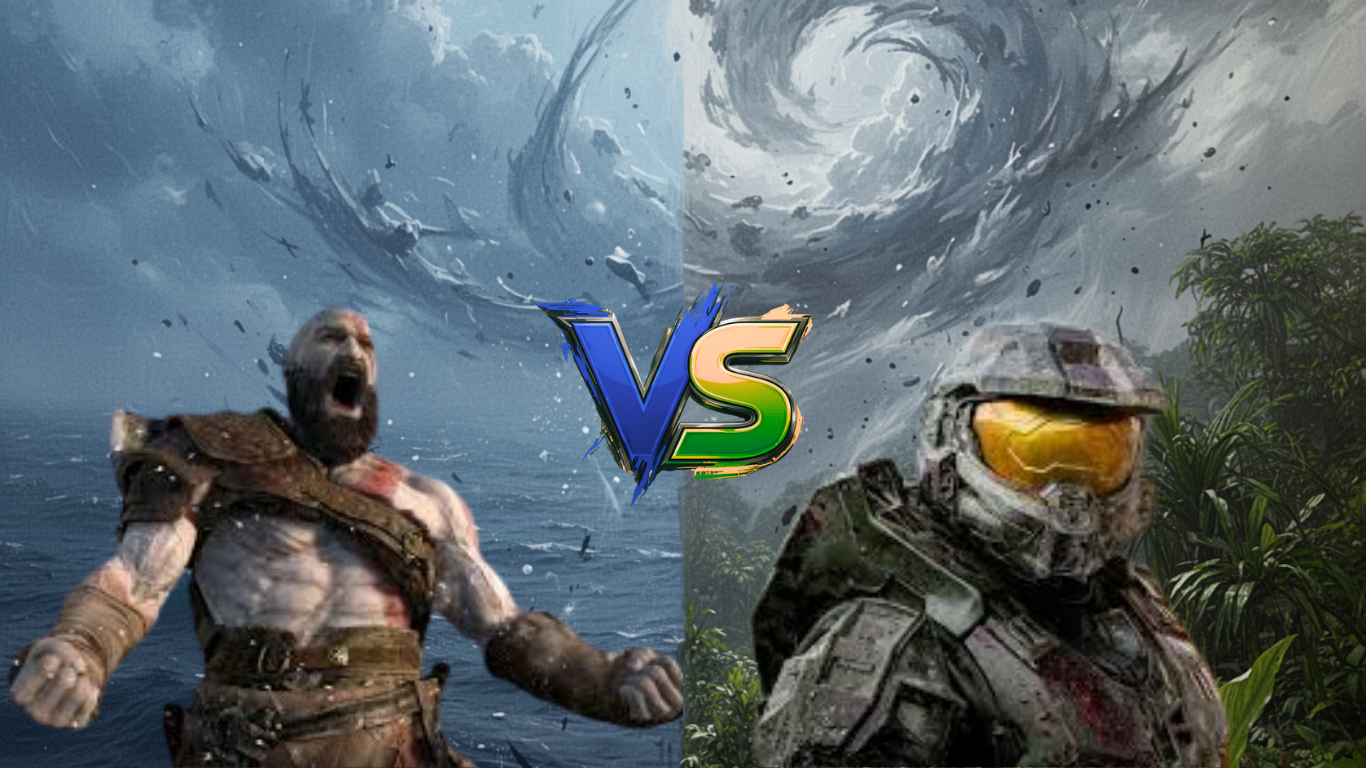
In every generation of the console wars, one question echoes louder than teraflops, subscriptions, or sales charts:
What games can I only play here?
Exclusives have always been the sharpest weapon in gaming’s biggest rivalry. But today, the battlefield has changed. It’s no longer just about single titles — it’s about entire ecosystems. On one side stands PlayStation Studios, the master of cinematic blockbusters. On the other, Xbox Game Studios, building a subscription-driven empire around player access and long-term engagement.
Welcome to the modern Exclusive War.

The Battlefield: Prestige vs Access
For years, Sony Interactive Entertainment has refined a clear strategy: deliver high-production, story-driven exclusives that define a generation.
Franchises like:
- God of War Ragnarök
- Marvel’s Spider-Man 2
- The Last of Us Part II
These aren’t just games — they’re system sellers. They dominate award shows, flood social media, and create cultural moments. Sony’s formula is polished, cinematic, and prestige-driven. When a major PlayStation exclusive drops, it feels like an event.
Meanwhile, Microsoft took a different path.
Instead of focusing purely on blockbuster prestige, Xbox built an ecosystem centered around Xbox Game Pass — a model built on access over ownership, variety over singular impact.
Titles like:
- Halo Infinite
- Forza Horizon 5
- Starfield
arrive day one on Game Pass, changing the value equation entirely.
Sony asks: “Do you want the best cinematic experiences?”
Xbox asks: “Why buy one game when you can access hundreds?”

The Weapons: Blockbuster Impact vs Ecosystem Power
PlayStation’s Weapon: Prestige and Polish
PlayStation’s strength lies in focus. Its studios craft deeply narrative, visually stunning games that often define the console generation.
Advantages:
- Strong brand identity
- Consistent critical acclaim
- Emotional, story-driven experiences
- Clear “must-own” titles
The downside? Big-budget development cycles mean fewer releases, longer waits, and high production risks.

Xbox’s Weapon: Scale and Strategy
Xbox’s power comes from scale. After major acquisitions, Xbox Game Studios expanded into a content machine feeding Game Pass.
Advantages:
- Day-one exclusives at no extra cost
- PC and cloud integration
- Broader genre diversity
- Lower barrier to entry
Instead of relying on a single knockout punch, Xbox fights with endurance — a steady stream of content that keeps players subscribed.

The Weaknesses
No army is invincible.
PlayStation’s risk:
If a blockbuster underperforms, there’s no subscription safety net to soften the blow. Prestige is powerful — but expensive.
Xbox’s challenge:
Quantity doesn’t always equal cultural dominance. Despite strong titles, Xbox hasn’t consistently matched the “event-level” hype that PlayStation exclusives generate.
In short:
- PlayStation wins moments.
- Xbox wins months.

The Bigger War: What Does “Exclusive” Even Mean Now?
The definition itself is evolving.
PlayStation has begun releasing some titles on PC years later.
Xbox launches first-party games simultaneously on console and PC.
Exclusivity is no longer just about locking players out — it’s about where the experience feels best, most complete, and most accessible.
And as subscriptions grow, the idea of buying a console purely for one game becomes more complicated. Gamers now consider ecosystems, communities, and long-term value.
The war isn’t just about one title anymore.
It’s about lifestyle.

Who Wins This Round?
If you crave cinematic storytelling, emotional depth, and award-winning single-player experiences — PlayStation’s blockbuster strategy feels unbeatable.
If you value flexibility, variety, and long-term value — Xbox’s ecosystem approach is incredibly compelling.
The truth?
This Exclusive War doesn’t have a permanent victor. It shifts with every release, every acquisition, every strategic pivot.
But one thing is certain:
As long as Sony Interactive Entertainment and Microsoft continue competing, gamers will keep winning.
And in the world of Console Critics…
This war is far from over.